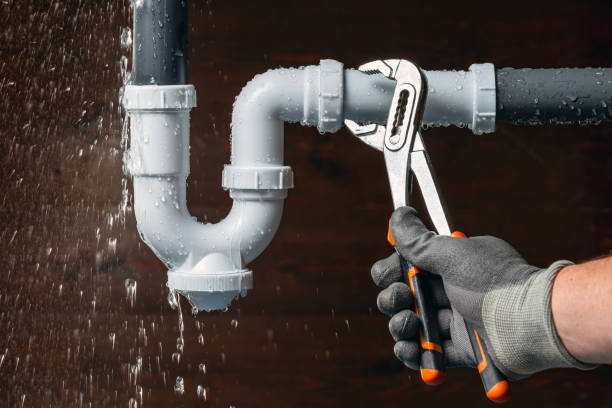
The difference between a $300 pipe repair and a $3,000 drywall-and-remediation job is often just whether the leak was found before or after excessive wall opening. Our detection service in Atlantic uses the same methods utilities and insurance adjusters rely on โ to pinpoint the failure before anything is cut.

No single detection method works for every leak scenario. Our techs are trained on four distinct approaches and select the right tool โ or combination โ based on pipe type, building construction, and leak characteristics.
Most effective on metal pipe under slab or in concrete โ materials that conduct sound efficiently. We establish a clean acoustic baseline by briefly shutting off the house before scanning.
Active water leaks create temperature differentials on the surfaces they contact. An infrared camera shows these as color-coded heat maps, revealing the wet zone inside a wall or under a floor without any cutting. A cold water leak behind drywall appears as a spreading cool zone; a hot water leak shows the inverse.
Pressure decay testing is the standard by which we confirm a leak is present before committing detection equipment time. A rapid drop vs. a slow one also indicates the approximate size of the escape point.
Tracer gas is the method of last resort for the most challenging cases. It adds setup time but finds leaks that acoustic and thermal methods alone can't conclusively locate.
Hidden leaks occur in different locations throughout a property โ each requiring a slightly different detection approach. Here's how we handle the most common scenarios in Atlantic, PA.
Supply lines running under or through the concrete slab fail from corrosion, shifting, or manufacturing defects โ and the leak is invisible from the surface but audible to acoustic equipment. We walk the floor on a grid pattern, map the loudest detection points, and triangulate to a specific floor location, typically within a square foot. Confirmed slab leak location is documented with marked coordinates for the repair crew.

We document the thermal anomaly, mark the approximate pipe location, and recommend a minimal access cut rather than a wide wall opening โ typically saving hundreds in drywall repair costs.
We also perform leak correlation surveys for longer line runs, using two listening points to triangulate the failure location mathematically.
Irrigation system leaks in main supply and lateral runs are found by isolating zones with the irrigation controller and pressure-testing each zone individually. Zone-by-zone testing narrows the failure to the smallest possible section.

We format detection reports specifically for insurance submission and provide documentation on our detection equipment and methodology to claims adjusters on request.
Commercial buildings have complex pipe networks where a supply or drain leak can go undetected through multiple floors before surfacing. We approach commercial detection systematically โ zone-by-zone pressure isolation, thermal scan of suspect surfaces, and acoustic confirmation.
Here's exactly how a Masters Plumbing Service leak detection call plays out in Atlantic, PA.
This step confirms we're looking for a real leak rather than a meter error or normal appliance cycling.
We isolate the supply system into zones โ hot side, cold side, individual branches โ and pressure-test each to determine which is losing water. This narrows the area of active search before detection equipment is deployed.
Within the isolated zone, we deploy thermal imaging first โ scanning walls, floors, and ceilings for moisture anomalies. Then acoustic equipment confirms the specific pipe location and narrows it to the tightest possible point. Tracer gas is added if acoustic results aren't conclusive.
Insurance-formatted reports are available for claims submission at the same standard โ no additional cost.

High-efficiency home with a slow leak โ about 1.5 gallons per hour. The tech used tracer gas after pressure testing confirmed the loss but acoustic detection couldn't localize it clearly. Gas detection found the escape at a micro-fitting under the slab in the utility corridor. Impressive work for a very difficult leak to find.
Our insurance company required professional leak detection documentation before approving the claim. Masters Plumbing Service's written report with pressure test data and thermal imagery was exactly what the adjuster needed. Claim approved. The detection cost was covered as part of the claim.
Commercial building with elevated water costs for six months. Masters Plumbing Service ran zone-by-zone pressure isolation across four floors, narrowed the loss to the third-floor kitchen supply branch, and located the failure with thermal imaging at a concealed valve body in the ceiling. No damage to the finished ceiling.
Our detection technicians are equipped with acoustic, thermal, and tracer gas tools for the full range of leak scenarios found in Atlantic, PA homes and commercial properties.

Call now to schedule โ most detection appointments available within 24โ48 hours.
๐ Call +1-844-833-0201 Now